

BRIGADE 2506
The nucleus of a Cuban exile force of 1,400 men, they Bay of Pigs invasion force, trained by the United States Central Intelligence Agency in Guatemala, which sailed from Puerto Cabezas,
The nucleus of a Cuban exile force of 1,400 men, they Bay of Pigs invasion force, trained by the United States Central Intelligence Agency in Guatemala, which sailed from Puerto Cabezas,
Name given to Fidel Castro’s revolutionary cause, adopted from the date of his ill-fated 1953 attack on the Moncada barracks in Santiago de Cuba. He began the movement in prison, and
Movimiento Veintiseis de Julio (26th July Movement) Read More »
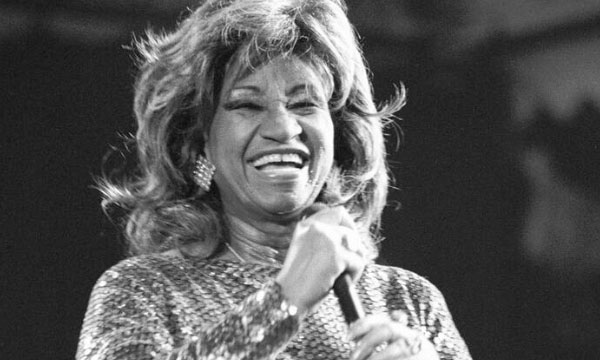
*Por Néstor Carbonell Cortina Poco después de asistir al apoteósico funeral de Celia Cruz en Nueva York, que culminó con la misa de cuerpo presente en la Catedral de San
CELIA CRUZ: ESTRELLA CUBANA Y UNIVERSAL Read More »
A combined assault on the Presidential Palace, March 13, 1957, by the Directorio Revolucionario and members of the Partido Revolucionario Cubano (Auténtico) in an attempt to kill President Batista. Most of the attackers, including
PRESIDENTIAL PALACE ATTACK Read More »
A series of riots (looting, arson, police station bombings and c3,000 deaths) that took place in Bogotá, Colombia, following the April 9, 1948, murder of the popular Liberal Party leader
HISTORICAL – Limitations on arbitrary power were effectively removed by Spain’s 1825 law placing colonial Cuba under a permanent State of Siege. Constitutional guarantees of individual rights were introduced after
War between the United States and Spain, April 24-August 12, 1898. The Cuban independence struggle became an international issue in 1898 when the United States, angered by Spanish excesses and
Spanish-Cuban-American War Read More »
Colonial Period – Prior to the British occupation of Cuba, 1762-1763, the principles of mercantilism ensured that Cuba’s legitimate foreign trade was exclusively with Spain, but this was supplemented from as
While Cuba’s 19th century development was initially financed by British investment, American investment had become the chief source well before the end of the century. As early as 1896 it had reached
Foreign Investment Read More »
Portuguese slavers brought Angolans to Cuba where they were known as Bantus or Congolese. In the mid-1960s, Angola became a focus of Soviet and Cuban attention as three different guerrilla