

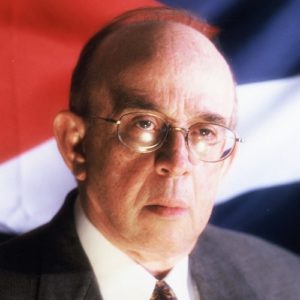
Painter. Born June 23, on the outskirts of Havana, he was an only child. His painting influences were derived from his growing up beside the sea. At age 16 he began to study at the Academia de San Alejandro. In 1944 he received the national prize for painting for his work Alameda, after which his career accelerated. His subsequent works, such as Vertical Light, continued to reveal his originality, talent, and conceptual purism. After graduating, he became a founding member of the “Thirty-year-old-Group,” along with other promising artists. He rose to be one of Cuba’s most renowned artists, finding expression in his pure, maternal depictions of women. He fled after the Revolution of 1959, and settled in the United States, where he reestablished himself, exhibiting his works in New York, Miami, and other United States cities, and in Puerto Rico. He died in Miami in 2004.

ECONOMIC CHANGES FOR A SUCCESSFUL CUBA TRANSITION
Note: Under the auspices of the George W. Bush administration and in the hope that Cuba’s transition to a democratic society would